July 2023
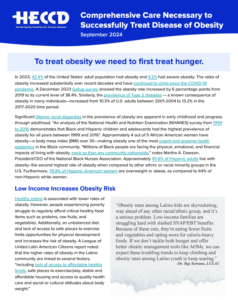
Obesity is the main risk factor for type 2 diabetes.[1][2] Sixty to ninety percent of all patients with type 2 diabetes also have the disease of obesity.[3] Furthermore, treating obesity could reduce the incidence of diabetes by 58%.[4]
Obesity Is a Unique Chronic Disease
The American Medical Association (AMA) recognizes obesity as a progressive, chronic disease state with multiple pathophysiological aspects requiring a range of medical interventions to provide treatment, management, and prevention.[5] The Centers for Disease Control and Prevention classifies obesity as an epidemic; about 2 in 5 adults and 1 in 5 children and adolescents in the United States live with obesity,[6] and many others are overweight.
Obesity and being overweight are major risk factors for a broad range of chronic diseases; therefore, the increase in the prevalence of obesity has major implications for the health and well-being of the population. In addition to a significantly increased risk of diabetes, obesity is associated with increased risk of 13 types of cancer. Fifty-five percent of all cancers diagnosed in women and 24 percent of those diagnosed in men are associated with obesity.[7] Individuals living with obesity are also at a higher risk of developing mental illness over their lifetime. Each of these chronic conditions are life-altering and result in a high economic burden upon the patient for both treatment as well as indirect costs such as productivity loss.
Economic Impacts of Diabetes Are Severe — Economic Impacts of Obesity Are Dire
While total diabetes-related costs are estimated to be $327 billion per year,[8] from 2017-2018, the total cost of chronic diseases due to the disease of obesity and Americans being overweight was $1.72 trillion — equivalent to 9.3 percent of the U.S. gross domestic product.[9] “Annual medical care expenditures of adults with obesity ($5,010) were double that of people with normal weight ($2,504).”[10]
If all eligible Americans were able to access weight-loss therapies to treat the disease of obesity, the resulting reduced disability and pain could enable society to reap as much as $100 billion per year[12] of social benefit in the form of reduced healthcare spending and improvements in quality of life.[13] Furthermore, annual medical care costs at the individual level increased with each class of obesity: a 68.4% increase for class 1 obesity, a 120.0% increase for class 2 obesity, and a 233.6% increase for class 3 obesity.[14] In a study of a managed care system, obesity was the third largest predictor of a patient costing in the top 10% of budget with an average one-year cost of $56,468 relative to the average cost of $4,674 for the other 90% of patients.[15]
People with Obesity Need the Full Continuum of Care
Comprehensive treatment options to treat and manage the disease of obesity include both intensive lifestyle intervention and pharmacotherapy[16] such as anti-obesity medicines (AOMs).[17] Full access to the standard of obesity care will also help reduce risk of diabetes,[18] heart disease, osteoarthritis, and other complications. Obesity may be the most under-treated chronic disease in the U.S. — only 2% of adults eligible for obesity pharmacotherapy receive it.[19] If we fail to address both prevention and treatment of obesity, we are giving up on the more than 100 million Americans who already live with this disease and continue to face social stigma and the perception that obesity is only a lifestyle issue.
We are witnessing tremendous innovation in available treatments for obesity. New obesity medications are game changers, increasing average weight-loss from 5-7% to 15-20%. Newer versions of obesity medications are showing well over 20% weight-loss.[21] Denying coverage for these life-altering medicines is unconscionable. It is crucial that policymakers, payors, and providers acknowledge and actively work to provide access to comprehensive care to treat and manage obesity, and by extension diabetes as well.
The bipartisan Treat and Reduce Obesity Act (TROA) would expand access to obesity treatment and care to seniors and Medicare beneficiaries. This bill includes expanded coverage for screenings, treatment from providers specializing in obesity care and access to FDA approved therapies such as AOMs.[20]
Learn about the Health Equity Coalition for Chronic Disease and our partners at HealthEquityAction.org.
Sources
[1] Hossain P, Kawar B, El Nahas M. Obesity and Diabetes in the Developing World — A Growing Challenge. N Engl J Med. 2007;356:213-215. doi: 10.1056/NEJMp068177
[2] Al-Goblan AS, Al-Alfi MA, Khan MZ. Mechanism linking diabetes mellitus and obesity. Diabetes Metab Syndr Obes. 2014;7:587-591. doi: 10.2147/DMSO.S67400
[4] Bramante, Carolyn T. “Treatment of Obesity in Patients With Diabetes.” Diabetes Spectrum 2017;30(4):237–243. https://doi.org/10.2337/ds17-0030
[5] https://policysearch.ama-assn.org/policyfinder/detail/obesity
[6] Hales, C.M., Carroll, M.D., Fryar, C.D., & Ogden, C.L. (2017) Prevalence of Obesity Among Adults and Youth: United States, 2015-2016. National Center for Health Statistics Data Brief. https://www.cdc.gov/nchs/data/databriefs/db288.pdf
[7] Cancers associated with overweight and obesity make up 40 percent of cancers diagnosed in the United States. (2017, October 3). CDC
[8] https://diabetes.org/about-us/statistics/cost-diabetes
[9] America’s Obesity Crisis, p.1. https://milkeninstitute.org/sites/default/files/reports-pdf/Mi-Americas-Obesity-Crisis-WEB_2.pdf
[10] Journal of Managed Care + Specialty Pharmacy report, JMPC, Direct medical costs of obesity in the United States and the most populous states, March 2021, p.357. https://www.jmcp.org/doi/10.18553/jmcp.2021.20410
[11] Department of Health and Human Services, Centers for Medicare & Medicaid Services Fiscal Year 2024 Justifications for Estimates for Appropriations Committees, p.234.
[12] Or $1 trillion over 10 years.
[13] JMPC, Direct medical costs of obesity in the United States and the most populous states, March 2021, p.357. https://www.jmcp.org/doi/10.18553/jmcp.2021.20410
[14] Meyers JL, Parasuraman S, Bell KF, Graham JP, Candrilli SD. The high-cost, type 2 diabetes mellitus patient: an analysis of managed care administrative data. Archives of Public Health. 2014;72(1). https://doi.org/10.1186/2049-3258-72-6
[15] In April 2023, the American College of Physicians (ACP) announced a “new initiative aimed at advancing equitable access to obesity care” which includes physician education, new practice guidelines, and advocacy to improve equitable access to care. American College of Physicians
[16] In 2022, the American Gastroenterological Association (AGA) released new evidence-based guidelines strongly recommending that patients with obesity use recently approved medications paired with lifestyle changes. AGA guidelines
[17] The Societal Value of Broader Access to Antiobesity Medication. https://www.ncbi.nlm.nih.gov/pmc/articles/PMC7003734/
[18] Velazquez A, Apovian CM. Updates on obesity pharmacotherapy. Ann N Y Acad Sci, 2018.
[19] Medicare Part D Coverage of Anti-obesity Medications — Challenges and Uncertainty Ahead. https://www.nejm.org/doi/full/10.1056/NEJMp2300516
[20] Statement: Re-introduction of TROA. https://obesitycareadvocacynetwork.com/news/ocan-statement-on-the-re-introduction-of-troa